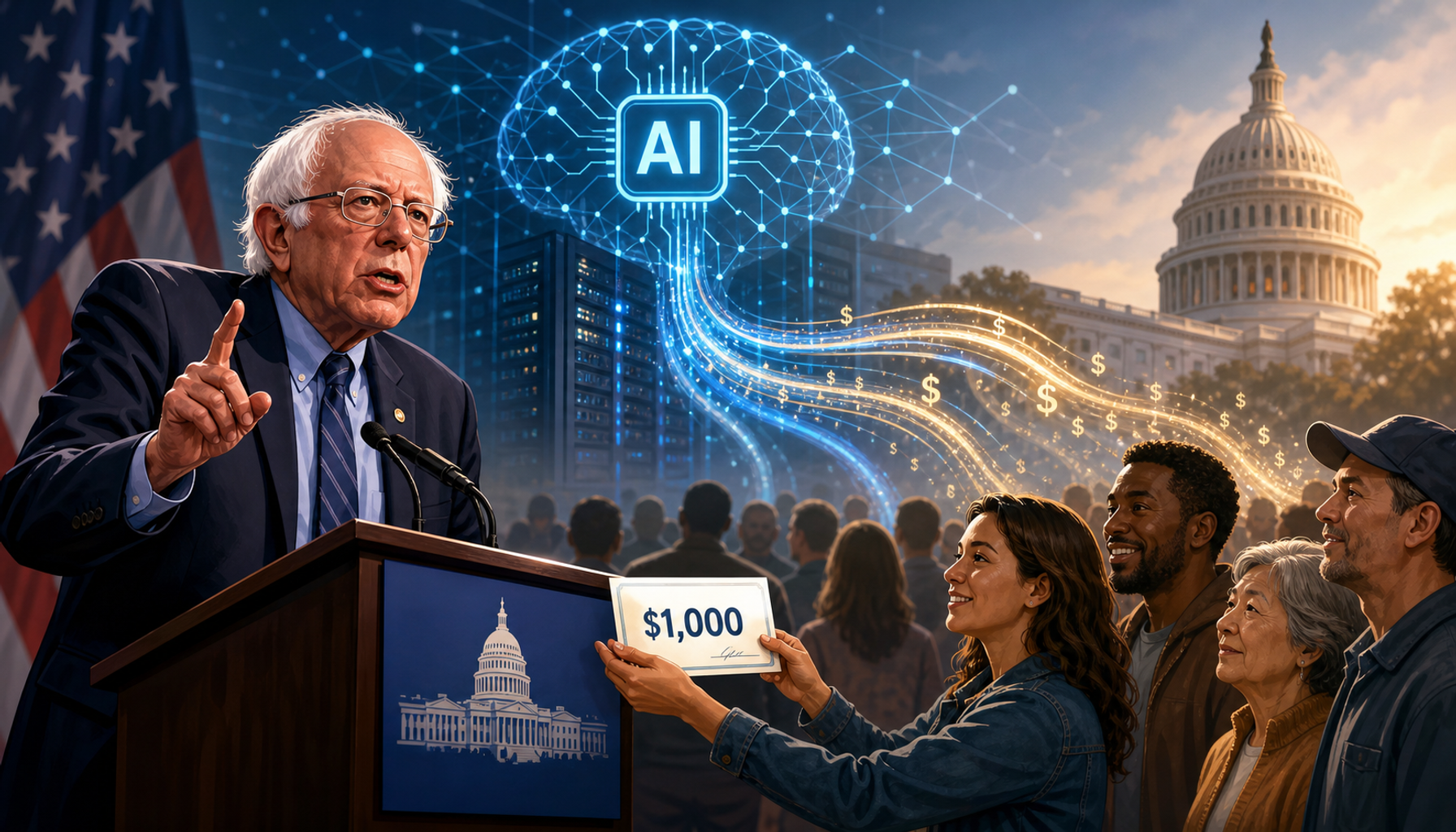
Bernie Sanders’ Proposal for AI-Driven Economic Equity
Bernie Sanders has introduced a plan to provide a $1,000 annual payment to every American, funded by profits generated from artificial intelligence (AI). This initiative aims to address the economic impacts of AI on the workforce and ensure that technological advancements benefit the entire population equitably.
Key Points of the Proposal
Funding Source
The $1,000 payments would be financed through a tax on the profits of AI companies. Sanders argues that as AI technology continues to advance and generate significant profits, it is essential to redistribute some of that wealth to the public.
Economic Context
Sanders’ proposal emerges amid growing concerns about job displacement due to AI and automation. He emphasizes the need for a safety net for workers who may lose their jobs as a result of these technological changes.
Universal Basic Income (UBI)
This proposal aligns with the concept of Universal Basic Income, which advocates for regular, unconditional payments to all citizens to help alleviate poverty and provide financial security.
Political Support
While Sanders has been a long-time advocate for UBI and similar measures, the proposal’s reception among lawmakers and the public remains mixed. Some view it as a necessary step towards economic justice, while others express concerns about the feasibility and potential economic implications.
Broader Legislative Goals
Sanders is also pushing for other reforms related to AI, including regulations to ensure ethical use of technology and protections for workers in industries affected by automation.
References
- Forbes: Bernie Sanders Proposes $1000 Annual Payment to Americans from AI Profits
- CNBC: Bernie Sanders proposes $1,000 annual payment to Americans from AI profits
- NBC News: Bernie Sanders proposes $1,000 annual payment to Americans from AI profits
This proposal reflects a growing trend among policymakers to consider how to address the economic challenges posed by rapid technological advancements, particularly in the realm of AI.