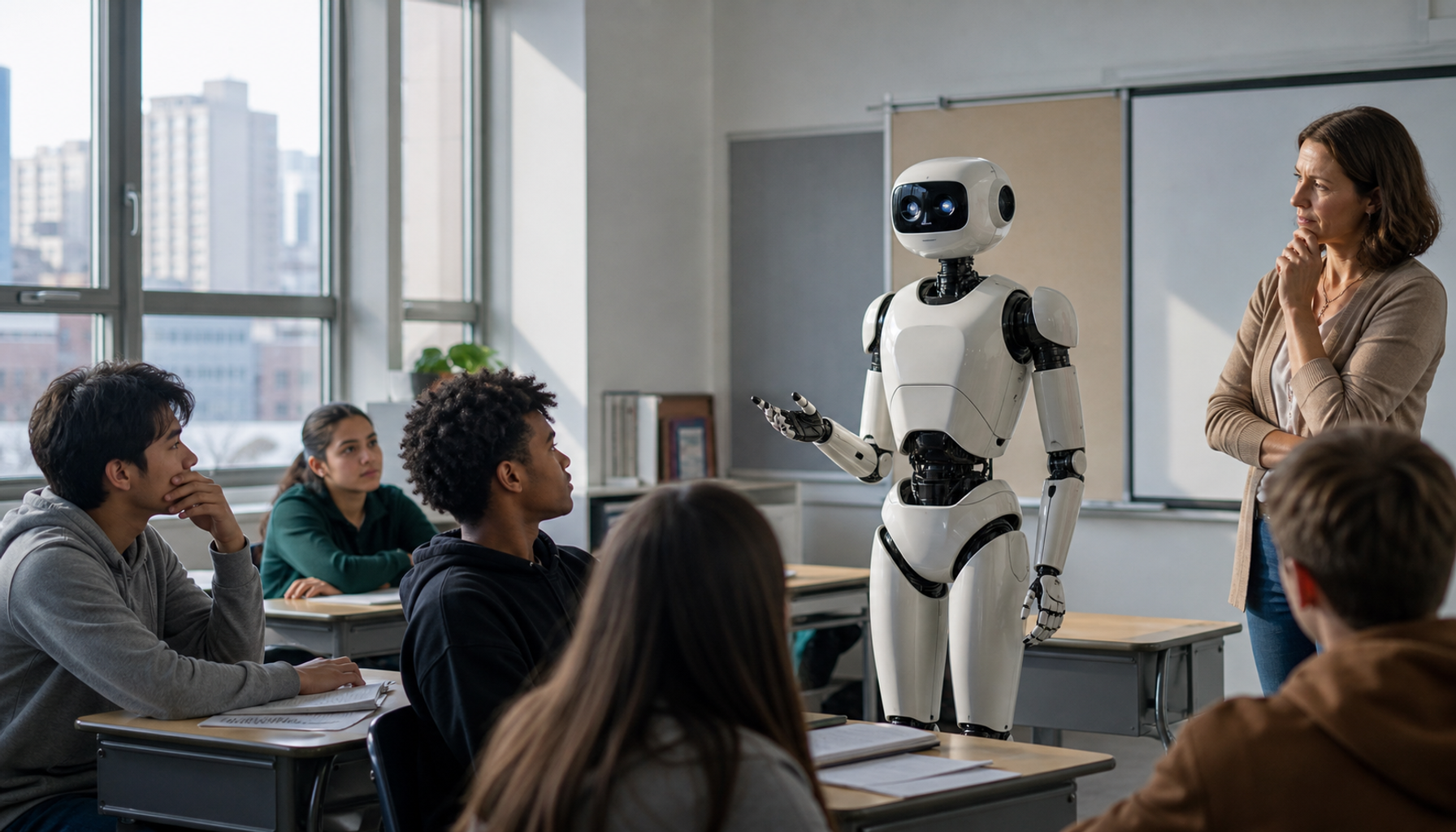
Controversy Surrounds Introduction of Humanoid Robot in New York High School
The plan to introduce a humanoid robot in a New York high school has sparked significant controversy among teachers and educational stakeholders. Below are the key points regarding this initiative:
Overview of the Plan
The New York City Department of Education has announced plans to introduce a humanoid robot named “Milo” in a high school setting. Milo is designed to assist in teaching social skills to students, particularly those with autism and other special needs.
Teachers’ Concerns
Many teachers have expressed strong opposition to the plan. They argue that the introduction of a robot in the classroom could undermine the essential human interactions crucial for effective teaching and learning. There is a fear that reliance on technology could diminish the role of educators and negatively impact student engagement.
Educational Impact
Critics argue that while technology can enhance learning, it should not replace the personal connections that teachers provide. They emphasize that social skills development, particularly for students with special needs, requires empathy and understanding that a robot cannot replicate.
Support for the Initiative
Some proponents of the robot argue that it could serve as a valuable tool for students who struggle with social interactions. They believe that Milo could provide a non-threatening way for students to practice social skills in a controlled environment.
Broader Context
This initiative is part of a larger trend in education where technology is increasingly integrated into the classroom. However, the debate highlights the tension between innovation and traditional teaching methods.
Public Response
The announcement has led to a broader discussion about the role of technology in education, with many parents and community members weighing in on the potential benefits and drawbacks of such initiatives.