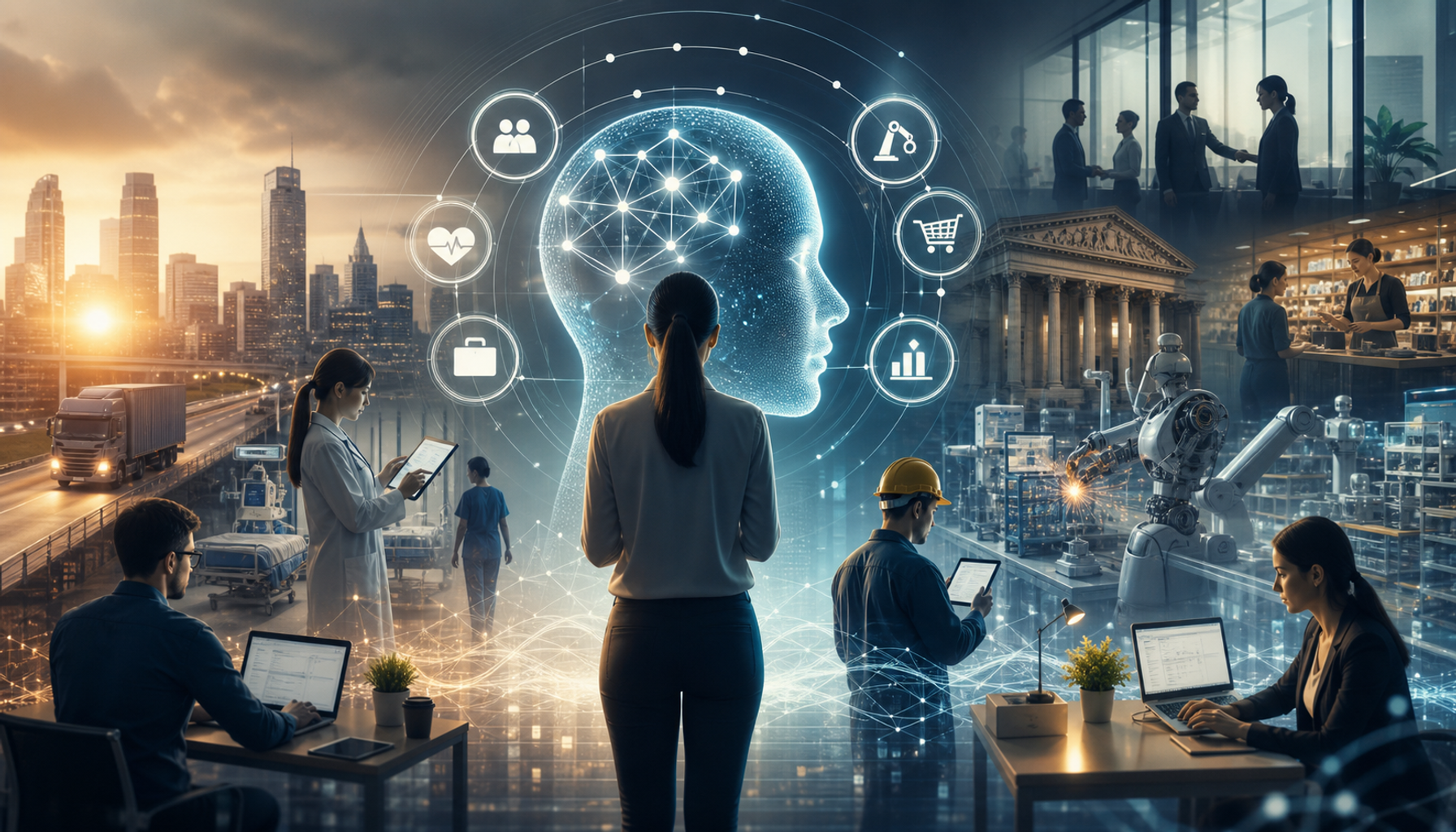
AI’s Impact on Human Economic Value Across Professions
Overview
Artificial Intelligence (AI) is increasingly influencing various professions, raising concerns about its potential to diminish human economic value. The integration of AI technologies into the workforce is reshaping job roles, creating new opportunities while simultaneously displacing traditional jobs.
Key Findings
Job Displacement and Transformation
- A report by McKinsey indicates that up to 375 million workers globally may need to change occupational categories due to automation and AI advancements by 2030. This represents about 14% of the global workforce. Many jobs, especially those involving routine tasks, are at high risk of automation (McKinsey, 2023).
- Professions in manufacturing, retail, and administrative support are particularly vulnerable. For instance, AI can automate tasks such as data entry, customer service inquiries, and even complex decision-making processes in finance and healthcare.
Economic Value and Productivity
- AI has the potential to significantly enhance productivity. According to a Forbes article, AI can increase economic output by automating repetitive tasks, allowing human workers to focus on more complex and creative aspects of their jobs. However, this shift may lead to a decrease in demand for low-skill jobs, which traditionally provide economic value to many workers (Forbes, 2023).
- The World Economic Forum highlights that while AI can create new job categories, the transition may not be smooth. Workers may face challenges in acquiring the necessary skills to adapt to new roles, leading to economic disparities (World Economic Forum, 2023).
Sector-Specific Impacts
- Healthcare: AI is revolutionizing diagnostics and patient care, but it may reduce the need for certain administrative roles. For example, AI algorithms can analyze medical images faster and often more accurately than human radiologists.
- Finance: AI is being used for fraud detection, risk assessment, and customer service, which could lead to job losses in traditional banking roles.
- Transportation: The rise of autonomous vehicles threatens jobs in driving professions, including trucking and taxi services.
Future Workforce Dynamics
- The future workforce will likely require a blend of technical skills and soft skills. Workers will need to adapt to new technologies and collaborate with AI systems. Continuous learning and upskilling will be essential to maintain economic value in the job market (McKinsey, 2023).
Policy and Ethical Considerations
- Policymakers are urged to consider the implications of AI on employment and economic inequality. Strategies such as retraining programs, universal basic income, and social safety nets may be necessary to support displaced workers (Forbes, 2023).
Conclusion
AI presents both opportunities and challenges for the workforce. While it can enhance productivity and create new job categories, it also poses a significant threat to traditional roles, particularly for low-skill workers. Addressing these challenges will require proactive measures from businesses, governments, and educational institutions to ensure that the workforce can adapt to the changing economic landscape.